.png)
5 Easy, Quick Tips to Improve Your Digestive Health
- Nancy Tran
- Mar 1, 2021
- 7 min read

Updated: May 11
It’s no secret that a healthy digestive system is essential to overall wellness. The gastrointestinal tract is our body’s primary tool for absorbing nutrients. It also plays a significant role in our immune system. Therefore, a healthy digestive tract is fundamental to our health — having one that isn’t working properly can lead to many health problems. Luckily, you can take a few simple steps to ensure that your digestive system stays happy and healthy.

Did you know that digestive disorders are the most common cause of hospital admissions in the U.S.? If you’re suffering from any form of digestive disorder or disease, whether it’s Irritable Bowel Syndrome, Crohn’s Disease, or Leaky Gut Syndrome, then question every stomach ache, diarrhea, or constipation because they may not be nuisances — they can also be symptoms of serious digestive issues. But don’t worry, these common digestive problems can be treated with simple lifestyle changes. These 5 simple tips are for you. These tips are an excellent starting point to begin your journey to better health.
The Importance of a Healthy Digestive System
Digestion is essential for breaking down food into nutrients that the body uses for energy, growth, and cell repair. Food and water are converted into smaller molecules of nutrients before they are absorbed by the blood and transferred to the body's cells. The body breaks down nutrients from food and alcohol into carbohydrates, proteins, fats, and vitamins.
Carbohydrates. Carbohydrates are sugars, starches, and fibre present in various foods. Carbohydrates are classified into basic or complex based on their chemical composition. Simple carbohydrates include sugars in foods such as fruit, vegetables, milk and milk products, and sugars introduced during food production. Complex carbohydrates are starches and fibre present in whole-grain bread and cereals, starchy vegetables, and legumes. The Dietary Recommendations for Americans, 2010, suggest that 45 to 65 percent of the required daily calories come from carbohydrates.
Protein. Foods such as beef, eggs, and beans consist of large protein molecules that the body digests into smaller molecules called amino acids. The body absorbs the amino acids into the blood from the small intestine, bringing them across the body. The Dietary Guidelines for Americans, 2010 advises that 10% to 35% of the overall daily calories come from protein.
Fats. Fat molecules are a rich source of nutrition for the body and allow the body to digest vitamins. Examples of good fats include oils such as olive, safflower, sesame, sunflower, etc. Butter, shortening, and snack foods are examples of less nutritious fat. The body breaks down fat molecules into fatty acids and glycerol through digestion. The 2010 Dietary Recommendations for Americans prescribe that 20 to 35 percent of the total daily calories should come from fat.
Vitamins. Scientists define vitamins by the solution in which they are absorbed. For example, water-soluble vitamins include vitamins B and C. Vitamins A, D, E, and K are fat-soluble. Each vitamin plays a different role in the development and health of the body. For example, the body retains fat-soluble vitamins in the liver and fatty tissues. In contrast, the body does not store water-soluble vitamins efficiently and discards extra vitamins in the urine.
The digestive system
The digestive system consists of the gastrointestinal (GI) tract—also known as the digestive tract—and the intestine, pancreas, and gallbladder. The GI tract collects hollow organs connected to a long, twisted tube from the mouth to the anus.
The empty organs that make up the GI tract are the jaw, the esophagus, the small intestine, the large intestine—including the rectum—and the anus. Food reaches the mouth and travels through the hollow organs of the GI tract to the anus. The liver, pancreas, and biliary are the solid organs of the digestive system. The digestive system allows the body to absorb food.
Bacteria in the GI tract aid digestion also called intestinal flora or microbiota. Parts of the nervous and circulatory systems also play a role in digestion. A jumble of nerves, hormones, bacteria, blood and the digestive system's organs completes the complicated digestion of the food and liquids that humans eat daily.
Tips to Improve Your Digestive Health
1. Eat five or seven servings of fruit and vegetables a day.

Be creative and be innovative when adding more fruits and vegetables to your diet ( see our blog on the 5 Simple Steps Smoothie ). Cover the plate with the rainbow shades, red and dark green. Stock up on canned and frozen vegetables for convenience, but make sure to use a lot of fresh produce in your meals. Plant food is high in fibre and includes many disease-fighting nutrients.
2. Drink Plenty of Water.

There is no concern that water will dilute the digestive juices or mess with digestion. On the contrary, drinking water before or after a meal improves digestion. Water is essential to good health. Water and other liquids help break down food so that you can absorb food into your body. Water also softens your stool, which helps to reduce constipation.
3. Avoid Food Poisoning.

Clean your hands and work surfaces before, during, and after cooking your meals. Germs can live in various areas around your kitchen, including your hands, utensils, cutting boards, and countertops.
Separate raw beef, poultry, fish, and eggs from ready-to-eat food. Keep separate your raw meats from other foods in your shopping cart and refrigerator.
Cook food at the correct internal temperature to kill unhealthy bacteria. Use a thermometer for food.
Keep the refrigerator at 4°C (40°F) or below. Refrigerate leftovers within 2 hours of cooking (or within 1 hour if food is exposed to temperatures above 32°C (90°F), as in a hot car).
4. Eat an Anti-Inflammatory Diet.

This consists of many fruit and vegetables, whole grains, plant-based proteins (like beans and nuts), fatty fish, and herbs and spices.
Fruits and vegetables: choose a variety of colours. Analysis reveals that vitamin K- found in leafy greens such as spinach and kale - minimizes inflammation, as do broccoli and cabbage. This same inflammation-fighting property is found in the chemical that gives fruit such as cherries, raspberries and blackberries its colour.
Whole grains: oatmeal, brown rice, whole-wheat bread, and other unrefined grains are rich in fibre, which can also help with inflammation.
Beans: They are rich in fibre and filled with antioxidants and other anti-inflammatory compounds.
Nuts: They have a healthy type of fat that tends to combat inflammation. (Olive oil and avocados are both excellent sources.) Stick to just a couple of nuts a day, or fat and calories will pile up.
Fish: consume at least twice a week. Salmon and sardines all have plenty of omega-3 fatty acids to combat inflammation.
Herbs and spices add antioxidants (with flavour) to your cooking. For example, turmeric, in curry powder, has a heavy compound called curcumin. And garlic inhibits the body's ability to produce things that increase inflammation.
5. Consume Probiotic Foods.

Greek Yogurt - Yogurt's most popular probiotic of the fermented food family is made by adding two strains of bacteria, Streptococcus thermophilus and Lactobacillus bulgaricus, to pasteurized milk. Milk thickens from the lactic acid formed by the bacteria, becoming a creamy substance. But while most Greek yogurts can be a reliable source of protein, not all of them can have probiotics. In addition, some products are heat-treated after fermentation, which usually destroys most beneficial active cultures, so search the label for the term "live active cultures." And make sure to steer away from those with added sugars that do more for the poor bacteria than for the healthy.

Kombucha - Kombucha is a somewhat bubbly fermented food-based drink made of black or green tea and a symbiotic culture of bacteria and yeast known as SCOBY. This functional food can only have probiotic advantages if it is not pasteurized, ensuring that you can buy a low-sugar refrigerated kombucha.

Kefir - While this smoothie-like milk drink exists next to yogurt, it could be your best choice if you have a milk intolerance (contact us for food sensitivity testing). Because kefir was found to mitigate the effects of stomach-irritating lactose in milk: Ohio State University studies also discovered that knocking back this fermented drink will decrease the lactose-induced bloating and gas by 70%! According to Frontiers in Microbiology, kefir is a strong, health-promoting probiotic food. What is especially promising about kefir as a probiotic food is that the bacteria have been shown to colonize the intestinal tract, making them more likely to confer their therapeutic effects on the intestines.
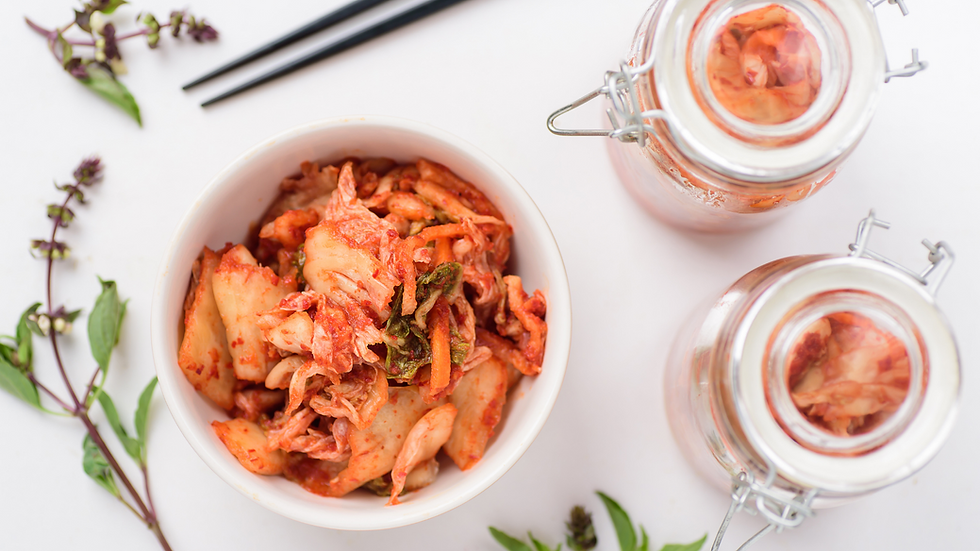
Kimchi - Kimchi is an Asian fermented vegetable dish made of cabbage, radishes, and scallions. This characteristic red colour comes from the seasoned paste of red pepper, salted shrimp, or kelp powder. The particular strains found in Kimchi can not only repair your intestine, but they may also help you stay slim: Researchers at Kyung Hee University, Korea, generated obesity in lab rats by feeding them a high-fat diet and then fed one subset of them, Lactobacillus Brevis, a culture strain used in kimchi. The probiotic suppressed the diet-induced weight gain by as much as 28 percent!

Miso - You probably heard of it in the appetizer miso soup you get in Japanese restaurants, but you can also find this typical Japanese paste in the supermarkets. It is produced by fermenting soya beans with salt and koji—a fungus called Aspergillus oryzae. It is a complete protein (includes all 9 essential amino acids) since it comes from soya beans. Still, miso also activates the digestive tract, enhances the immune system, and decreases the risk of multiple cancers.

Tempeh - Tempeh is a fermented soy food made from a yeast starter, with a meaty, tender bite with a neutral flavour. It is an open canvas for all your favourite seasonings. In addition to its belly advantages, the regular 3-ounce tempeh serving provides 16 grams of protein and 8 percent of the required daily calcium.
There are many more; these are just a few highlights of fermented foods. If you find this article helpful, comment below and let us know to produce more articles like this!
A healthy digestive system is one of the keys to solid immunity. Eating a diet rich in whole grains, fruits and vegetables will keep your gastrointestinal tract in good working order. The gastrointestinal tract is our body’s primary tool for absorbing nutrients; it also plays a role in our immune system.
Get started on 7-day healthy recipes: You can now grab your copy pre-launch Immune Enhancement on Amazon for free in a week.

References:


Comments